He had started his activities in SCI after World War II, in the Swiss mountains, in war-devastated Germany and flood-devastated Netherlands, and in the 1950s served in the board of the Swiss SCI branch. I had known him from childhood through my parents, and in my grammar school in St. Gallen he was our drawing teacher for one year – just before he got retired.
It was probably through him, or the connection my parents had with him, that I heard from SCI for the first time – back in the 1980s when Cold War prevailed and conscientious objection was not an option in my country. After his time in the board of the Swiss branch he had still been active for SCI at the local level in St. Gallen – combining organisational work for SCI with political campaigning for peace and – above all – the introduction of an alternative to military service.
 He was a man of almost unimaginable modesty, born too early to be infected by the we-want-the-world-and-we-want-it-now spirit of the 1960s but rather marked by his protestant upbringing. He was as gentle as a person as he was consequent, sometimes stubborn in the defence of his ideals.
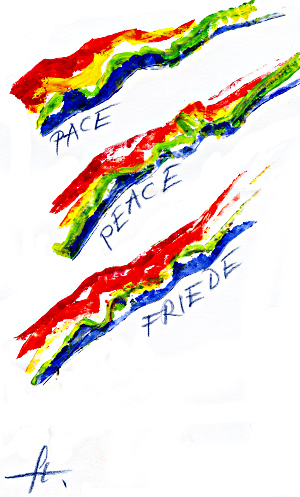
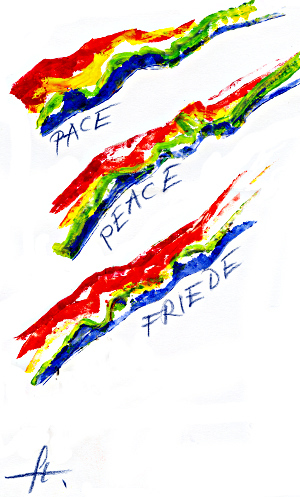
He will continue to live not only in the people that had known him and whom he had softly influenced, but also in his drawings, landscape paintings and the notorious artprints he used to send, until very lately, for New Years’ greetings – usually symbolizing the hopes and aspirations for a more just and peaceful world. And who ever has seen his handwriting will not easily forget his style.
Only in last October I received a last handwritten letter (I assume he never used email, and not even a computer) from him, in which he was wondering about SCI’s plans for the 100th anniversary, and still today, when I sadly read about his death, it was on my desk, still unanswered, and now it is too late. May he rest in peace.
Heinz Gabathuler
More on Fridolin (in German language):